Belonging is developmental work
It is easy to think of school celebrations and traditions as the fun extras — nice, but not essential. For young children, they are closer to the opposite. Children thrive when they feel part of something larger than themselves, and a strong school community gives them exactly that sense of belonging, at the very age when it lays the foundation for confidence, empathy, and identity. A Montessori school is a community, not just a classroom, and the traditions that hold that community together are doing real developmental work — not just filling the calendar.
The rhythm of the year
Young children are deeply oriented to order and rhythm, and the seasonal cycle of a school year speaks directly to that need. The traditions families look forward to — seasonal celebrations, community gatherings, festivals of light in winter, spring events, end-of-year milestones — give the year a shape a child can feel and anticipate. These repeated rituals teach children about time, seasons, and cultures in a way no lesson could, and they give the whole community shared moments to look forward to together. Over five decades in Brea, we have built a rhythm of traditions that families come to treasure.
Walking around the sun
One of the loveliest Montessori traditions is the birthday “walk around the sun.” The birthday child carries a small globe and walks slowly around a candle representing the sun, once for each year of their life, while the class marks each trip. It is a small ceremony, but it does something beautiful: it helps a young child grasp, concretely and joyfully, the passage of a whole year — and it celebrates them as a valued member of the community. Little rituals like this are Montessori in miniature: concrete, respectful, and quietly profound.
Grace, courtesy, and shared care
Community is not only the big events. It is woven into the everyday: welcoming a new student, caring for our shared classroom together, helping a younger child, cleaning up as a group, greeting families warmly at drop-off. These daily moments of shared responsibility and courtesy are where children practice being part of something — and they are the reason a Montessori environment feels so respectful.
Weaving families in
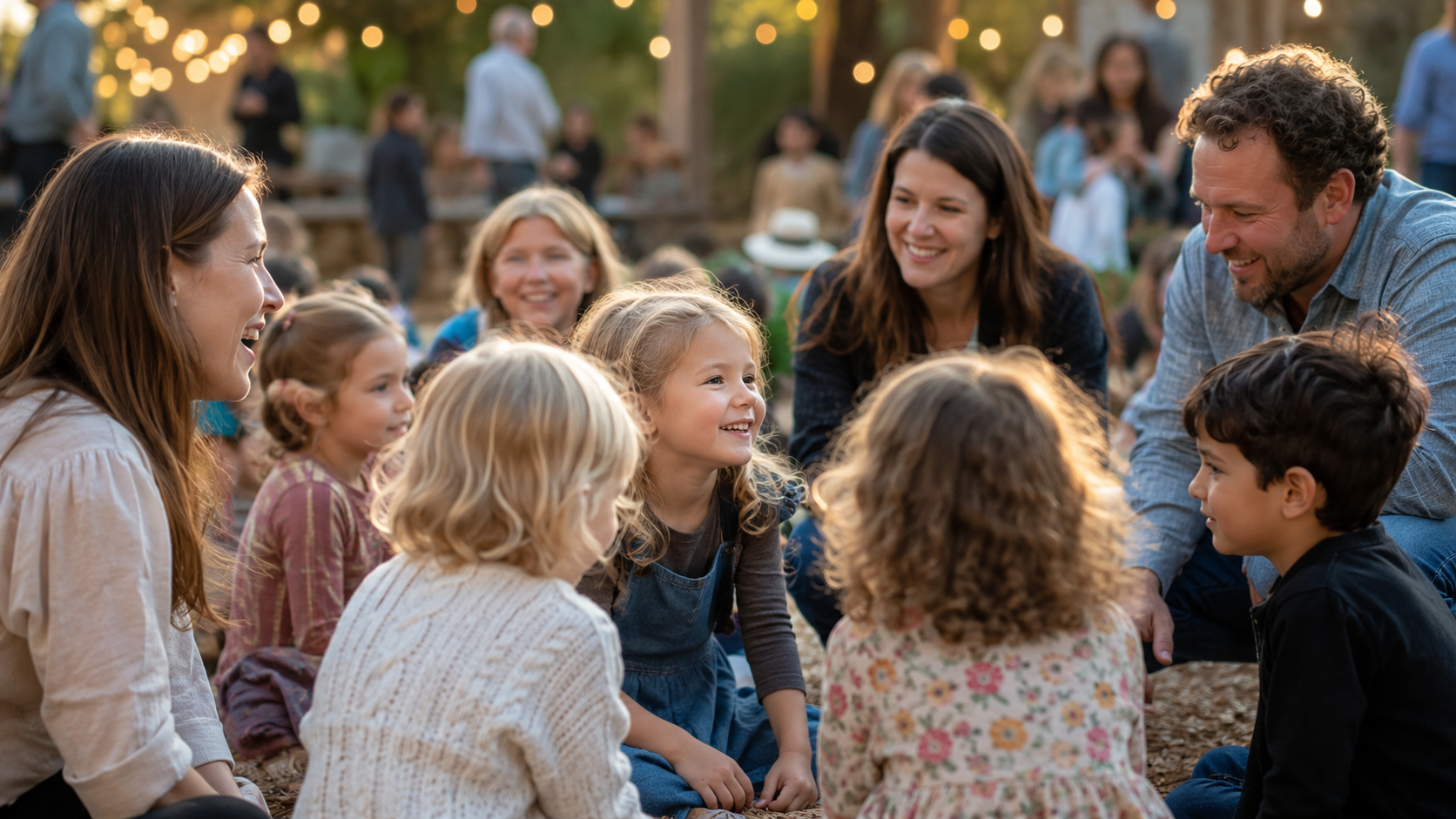
A school community is not only children — it is families. Traditions and events are what turn a group of enrolled families into a genuine community: parents meeting each other, celebrating milestones together, seeing their children as part of a larger whole. For families new to Brea, or new to Montessori, this connection is often what turns a school into a second home. When teachers know your child deeply, when older students look out for the younger ones, and when milestones are celebrated together, a school becomes a place families belong to, not just attend.
A second home
Belonging is not an add-on to the academic program; for young children it is the ground everything else grows from. A child who feels genuinely part of a warm, familiar community brings that security to everything else they do — they take more risks, form easier friendships, and settle more deeply into their work. The traditions and events of a school might look, from the outside, like the fun part. From the inside, they are a big part of what makes a young child feel safe enough to become fully themselves. These stories offer a window into that community and the traditions that hold it together.