It is not about buying wooden toys
The most common misunderstanding about Montessori at home is that it requires a shelf of expensive wooden materials and a Pinterest-perfect playroom. It does not. The heart of Montessori at home is a shift in how you see your child — as capable, eager, and genuinely wanting to participate in real life — and a few small changes to your environment and your habits that let that capability come out. You do not need to recreate a classroom. You need to let your home be a place where your child can do real things for themselves.
Set up the environment so they can succeed
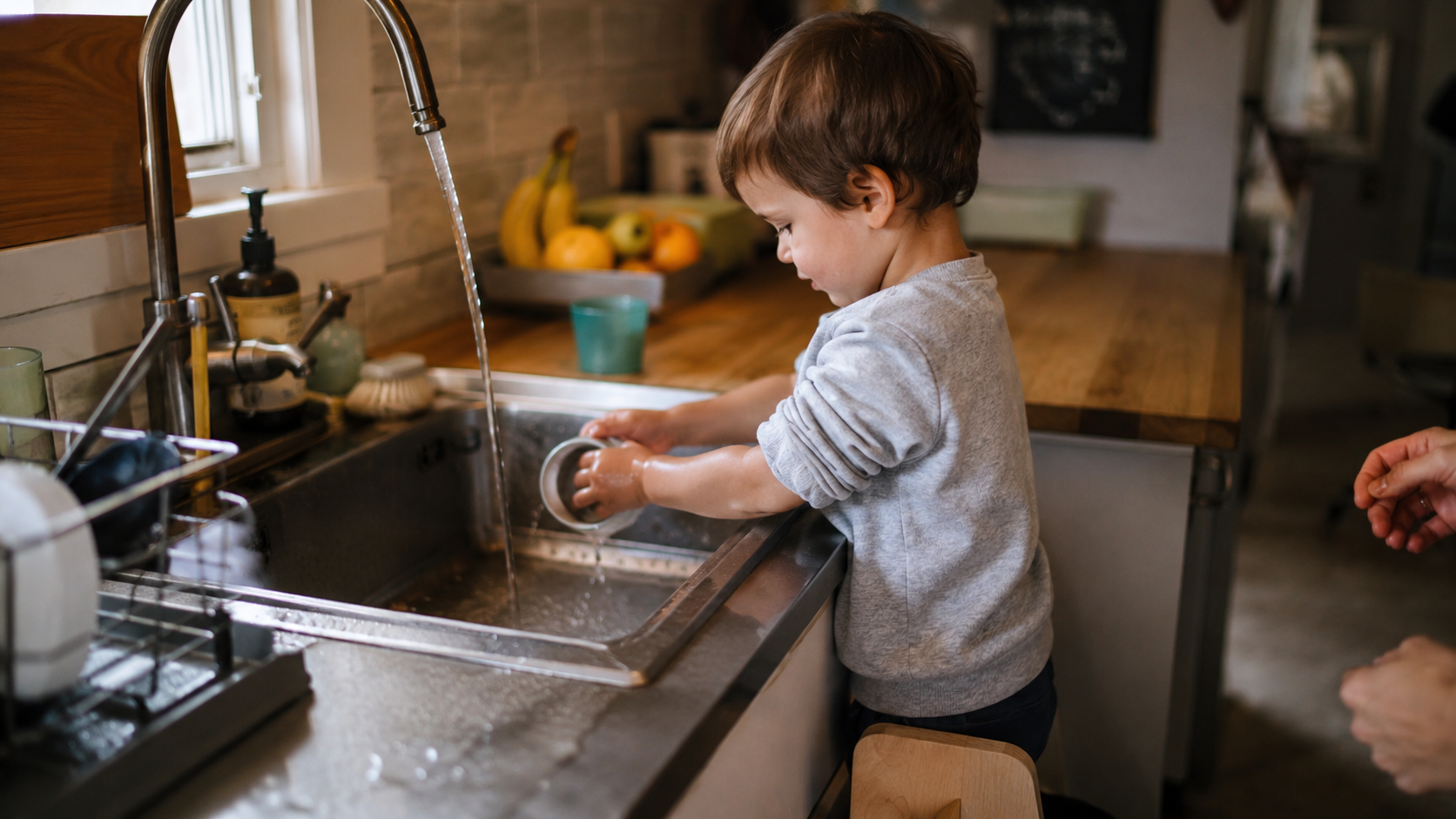
Young children are driven to do what they see the adults around them doing, and they can do far more of it than we usually let them — if the environment is set up for their size. This is the single highest-leverage change you can make. A low hook where a preschooler can hang their own coat. A small pitcher and a couple of cups on a low shelf so they can pour their own water. A step stool at the bathroom sink and the kitchen counter. A basket of their own snacks they are allowed to choose from. Clothes stored low enough to reach. None of this is expensive, and each small setup quietly transfers a task from you to them — which is exactly what they want. When a child can meet a need themselves, they do not just save you a step; they build the deep belief that they are competent.
Freedom within limits, at home
Montessori's guiding balance — freedom within limits — works just as well in a kitchen as in a classroom. Give your child real choices, but inside clear, consistent boundaries. “Would you like the blue cup or the green cup?” is freedom; “we drink water at the table” is the limit. Genuine choices, offered many times a day, satisfy a young child's powerful need for independence and dramatically reduce the power struggles that come from feeling controlled. The limits, held consistently and kindly, give them the security of knowing how their world works. Children raised with this balance tend to be both more cooperative and more self-directed — they are used to making decisions inside a frame they can trust.
Practical life is everywhere
In a Montessori classroom, “practical life” activities — pouring, spooning, buttoning, sweeping, washing, food preparation — are the foundation of the whole curriculum, because they build concentration, coordination, order, and independence all at once. Your home is already full of them; you just have to let your child in. Let them tear the lettuce, whisk the eggs, carry their plate to the sink, match the socks, water the plants, wipe up their own spill. Yes, it is slower and messier at first. But these ordinary tasks are doing extraordinary developmental work, and they give your child the thing they crave most: a real, useful role in the life of the family.
Slow down and let them try
The hardest part of Montessori at home is not the setup — it is the patience. It is almost always faster to zip the jacket, pour the milk, or tie the shoe yourself. But every time you do the thing your child could learn to do, you send a small message that they cannot. Building in a few extra minutes so a four-year-old can struggle with their own zipper is one of the most valuable gifts you can give them. When you cannot wait — some mornings you simply cannot — that is fine; just aim for “let them try” as the default, not the exception.
Model, do not manage; and let spills happen
Young children learn far more from watching than from being told. Instead of correcting from across the room, show them slowly how it is done — how to carry the cup with two hands, how to wipe the table, how to put the shoes away — and then step back and let them practice. And when the water spills (it will), resist the rescue: hand them a cloth and show them how to clean it up. A spill is not a failure; it is the next lesson. Over time, these small moments add up to a child who is capable, confident, considerate, and genuinely at home in their own life — which is the whole point.