
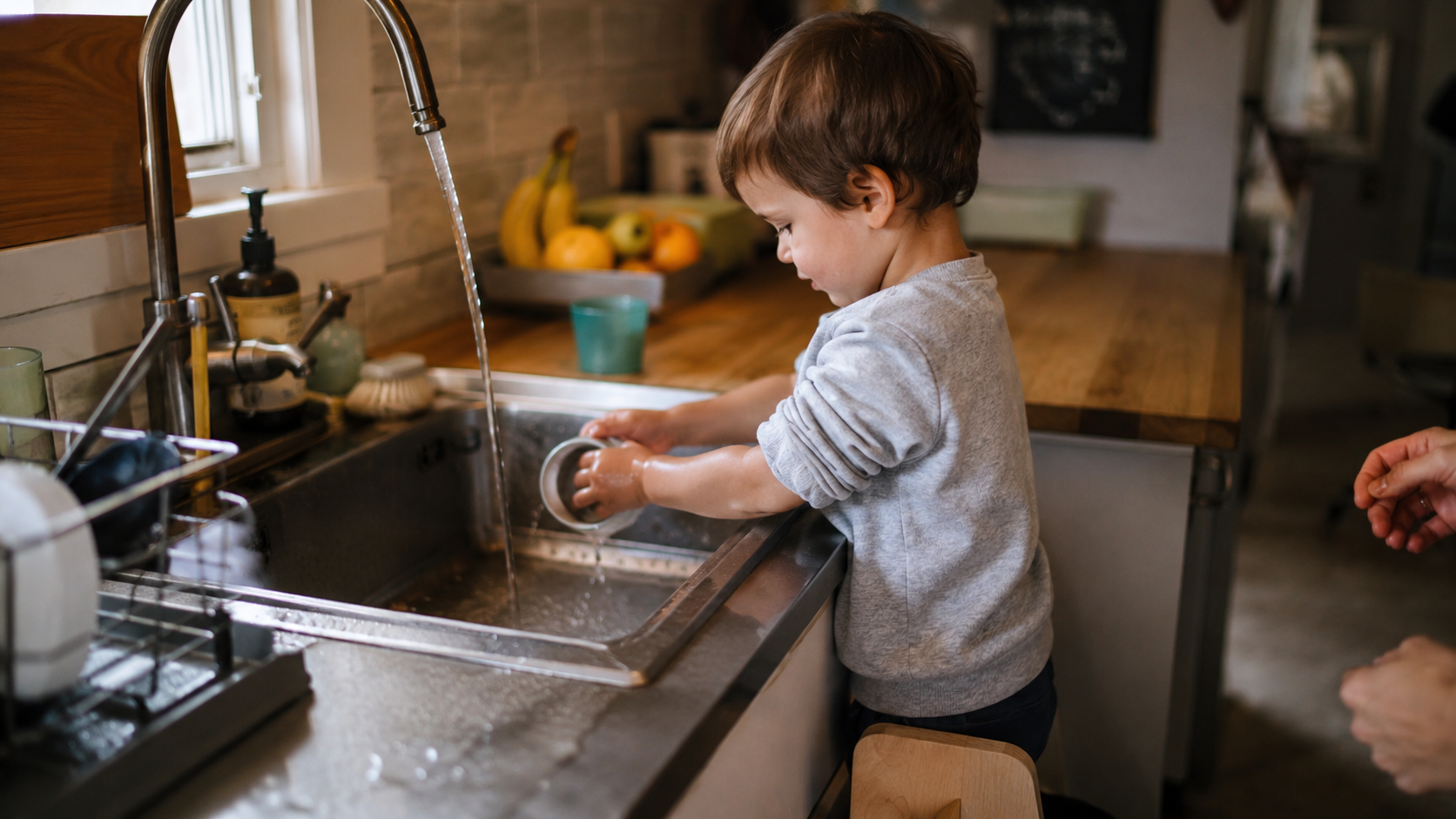
Parents often assume "doing Montessori at home" means buying a set of pricey wooden materials and recreating a classroom in the playroom. It does not. The materials belong at school. What belongs at home is the mindset behind them — and that costs nothing.
At its core, Montessori at home comes down to one idea: help me to do it myself. Here are five simple ways to live that out, starting today.
1. Make your home a place your child can actually use
Young children are capable of far more than we usually let them do — the obstacle is often that everything is built for adults. Small changes remove that barrier:
- A low hook for their coat, and a basket for shoes by the door.
- Cups and plates on a low shelf they can reach.
- A step stool at the bathroom sink.
- Clothes stored so they can choose and dress themselves.
Every time a child can do something without asking, you are building independence — and, honestly, making your own mornings easier.
2. Let them do real work (yes, even when it is slower)
Children do not want to be entertained nearly as much as they want to contribute. Real, purposeful jobs are deeply satisfying to them in a way plastic toys never are:
- Pouring their own water from a small pitcher.
- Washing vegetables, stirring, spreading, setting the table.
- Wiping a spill, watering plants, feeding a pet, sorting laundry by color.
It will be slower and messier than doing it yourself. Do it anyway. That "slow" pouring is coordination, concentration, and confidence being built in real time.
3. Talk with them, not just at them
Montessori treats children with genuine respect, and language is where that shows most. Speak to your child in real sentences. Narrate what you are doing. Ask what they think. When they are upset, name the feeling instead of rushing to fix it. Children who feel heard become children who can express themselves — one of the best gifts you can give before school.
4. Follow their interest instead of scheduling it
If your child is obsessed with bugs, or trucks, or the moon, lean in. Get a library book, watch the ants together, ask questions you do not know the answers to. Learning that starts from a child's own curiosity goes deeper and lasts longer than any flashcard. Your job is not to direct the curiosity — just to feed it.
5. Protect concentration — and boredom
When your child is deeply absorbed in something — stacking, sorting, studying a leaf — resist the urge to interrupt, praise, or redirect. That focus is precious, and every time we break it, we teach a child that their attention belongs to us, not to them.
And do not be afraid of a little boredom. A child with nothing scheduled and a few open-ended objects will, given the chance, invent, build, and imagine. Boredom is often the doorway to the best kind of play.
The one thing that matters most
If you take away just one idea, make it this: do less for your child, and trust them to do more. That single shift — stepping back so they can step up — is the essence of Montessori, at school and at home. It builds the independence, resilience, and quiet confidence that carry a child far beyond the preschool years.
Want to see how these same principles shape a full classroom day? Schedule a tour — we would love to show you around.